


Rogues’ Gallery of Post-Harvest Pests
go.ncsu.edu/readext?295168
en Español / em Português
El inglés es el idioma de control de esta página. En la medida en que haya algún conflicto entre la traducción al inglés y la traducción, el inglés prevalece.
Al hacer clic en el enlace de traducción se activa un servicio de traducción gratuito para convertir la página al español. Al igual que con cualquier traducción por Internet, la conversión no es sensible al contexto y puede que no traduzca el texto en su significado original. NC State Extension no garantiza la exactitud del texto traducido. Por favor, tenga en cuenta que algunas aplicaciones y/o servicios pueden no funcionar como se espera cuando se traducen.
Português
Inglês é o idioma de controle desta página. Na medida que haja algum conflito entre o texto original em Inglês e a tradução, o Inglês prevalece.
Ao clicar no link de tradução, um serviço gratuito de tradução será ativado para converter a página para o Português. Como em qualquer tradução pela internet, a conversão não é sensivel ao contexto e pode não ocorrer a tradução para o significado orginal. O serviço de Extensão da Carolina do Norte (NC State Extension) não garante a exatidão do texto traduzido. Por favor, observe que algumas funções ou serviços podem não funcionar como esperado após a tradução.
English
English is the controlling language of this page. To the extent there is any conflict between the English text and the translation, English controls.
Clicking on the translation link activates a free translation service to convert the page to Spanish. As with any Internet translation, the conversion is not context-sensitive and may not translate the text to its original meaning. NC State Extension does not guarantee the accuracy of the translated text. Please note that some applications and/or services may not function as expected when translated.
Collapse ▲Cinara Aphids
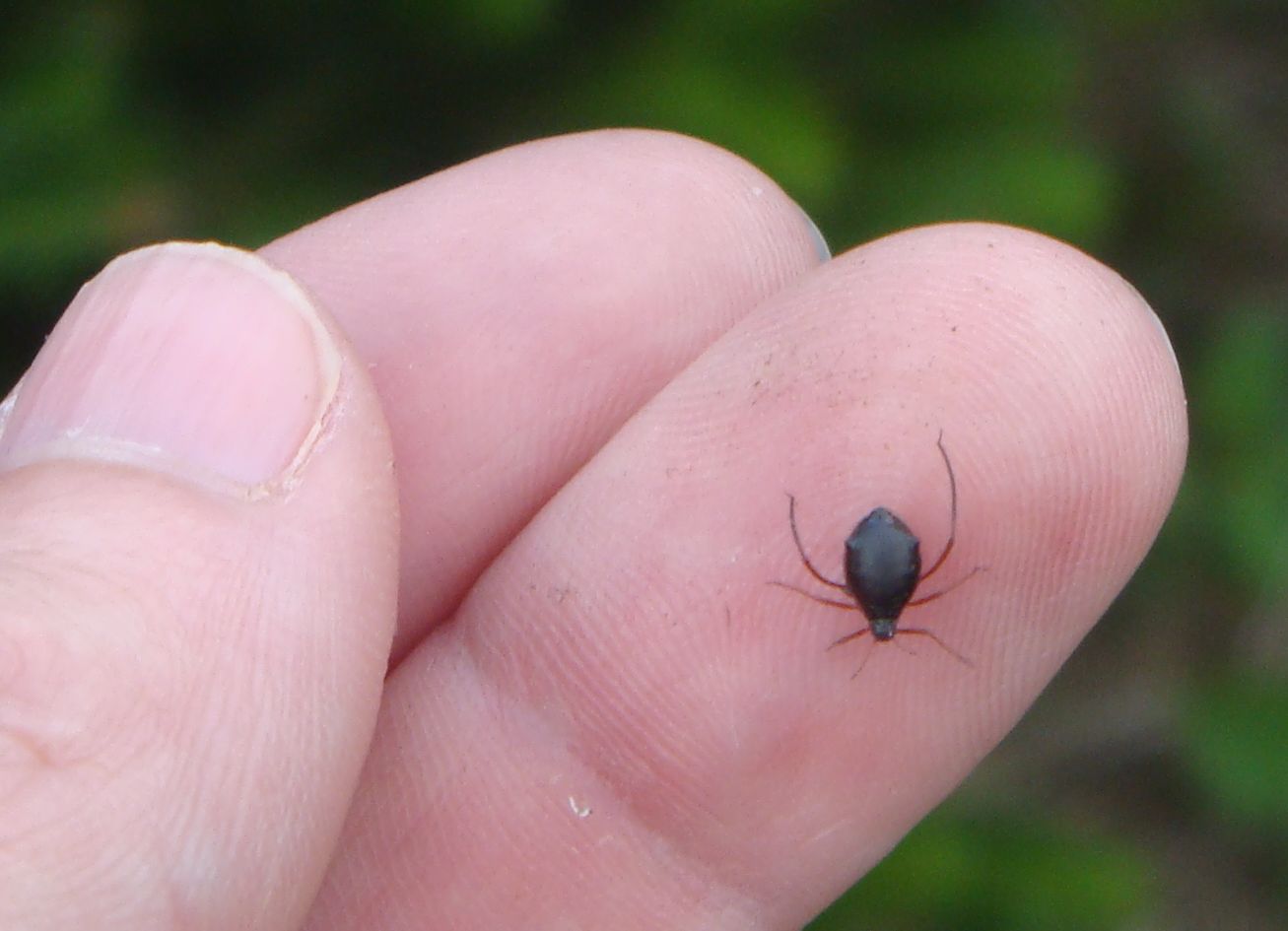
Close-up of a Cinara aphid
Cinara aphids are large brown to black aphids. They feed on almost all species of conifers and are found throughout North America. They are common on Virginia pine and white pine. Most of those trees are treated in the fall before harvest for this pest. But Cinara aphids on firs are rare. Cinara aphids on fir live in colonies that are often cared for by ants. Sometimes called the gypsies of the insect world, they move from tree to tree so that insect predators can’t find them. The colonies are sometimes on the tree top where the grower can see them and treat affected trees. Unfortunately, in the fall they are more often hidden on branches down inside the tree. Aphids remain in trees when the trees are cut. When the tree is moved to warmer locations, the aphids start reproducing – having live young. Numbers can build rapidly in the house! If you are used to seeing aphids on garden or landscape plants such as roses, you might be surprised by the appearance of Cinara aphids. They are much larger and brown to black. Many people have mistaken Cinara aphids for ticks. Even pesticide applicators have done so in the past. Ticks have never been found on Christmas trees at any time of year in western North Carolina and it’s simple to tell them apart.
| Cinara Aphids | Ticks |
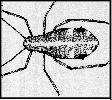 |
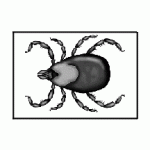 |
|
|
Spruce Spider Mite
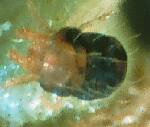
Spruce Spider Mite
The spruce spider mite is a common pest of Fraser fir in western North Carolina. Growers commonly scout for and control this pest. Spider mites lay eggs that spend the winter on the foliage and hatch in the spring. Infrequently, when the fall is warm and dry, mites are still active when trees are cut. They continue to lay eggs and reproduce on the cut tree. Spider mites can cause small red stains on carpets, ornaments, or furnishings. Their feeding may also cause the needles to drop prematurely. Spider mites are very small. They may appear like dark-red dots when shaken out of the tree. With a magnifying lens you can see the eight legs characteristic of the adult mite. Spider mites can’t live in your house. Once the tree is removed, they will die out because there is nothing left for them to feed on. They do not bit, nor do they cause any diseases. Detecting the mite early is the best way to prevent damage to furnishings.
Praying Mantids
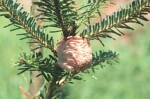
Praying Mantis
Praying mantids are insect predators well known for their prominent front legs folded as if in prayer. Their egg cases are occasionally found on Fraser fir Christmas trees. Females lay between 200-400 eggs in the fall in a frothy liquid which hardens, sticking to the branch. Once warmed in the home, unfortunately, the eggs hatch and the tiny mantids can invade your home. Again, these insects do not bite or carry disease. If the egg case can be located, remove it from the tree and put it outside. Small mantids that have escaped can be vacuumed up or caught and released outside.