Scientific name:Mindarus abietinus
Where from: Native to North America
Type of pest: Cosmetic damage
Pest description: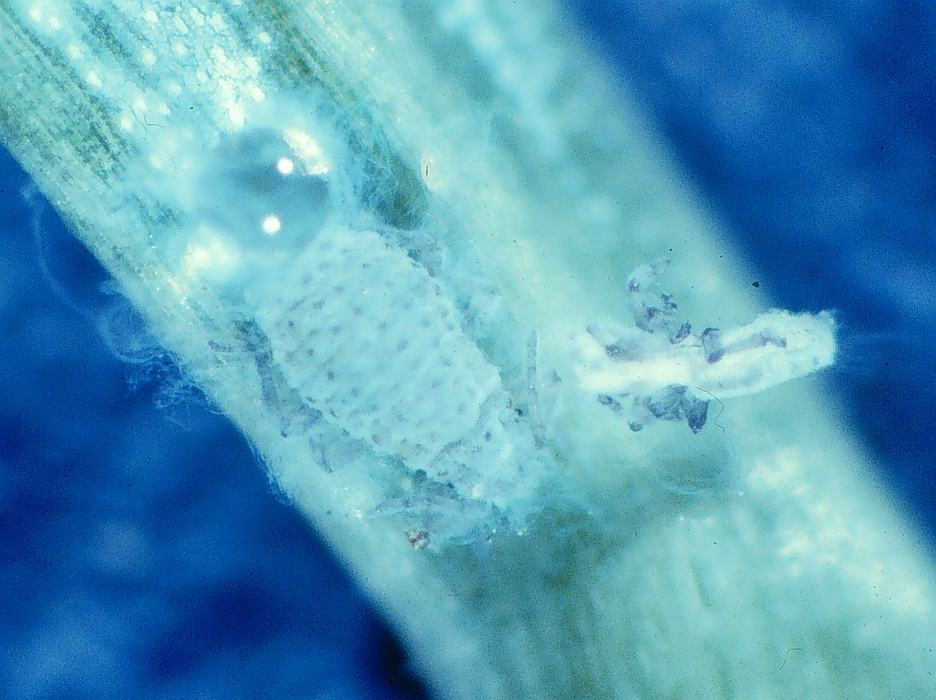
- Newly hatched aphids are very small and require a magnifying lens to see clearly. More mature aphids can be seen with the naked eye.
- Aphids may have a clear bead of honeydew at the end of their abdomen. More mature aphids have white filaments.
- By mid-May, aphids with wings are also found.
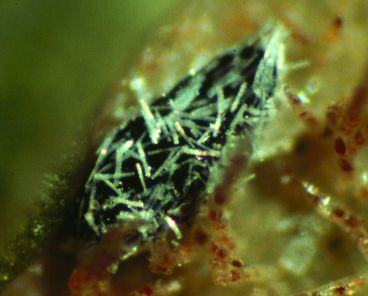
Twig aphid eggs are small, black, and teardrop shaped. White, waxy rods are scattered across the surface of the egg. Sometimes the egg appears flat, and these may have been fed on by predators. Eggs get plumper when they are about to hatch in March. Eggs are present from June until they hatch in March and early April.
Damage to tree:
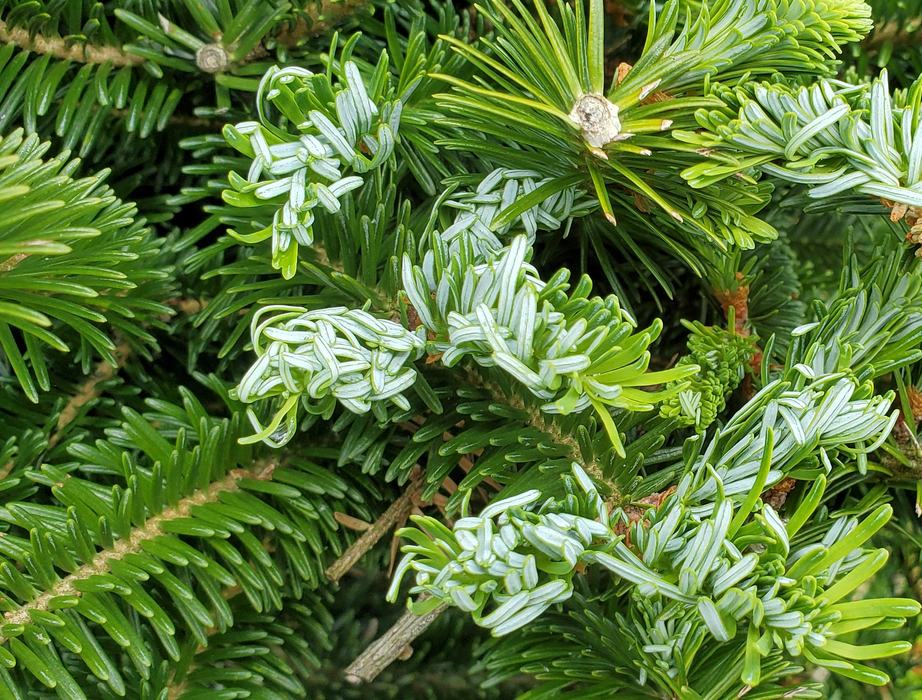
- Twig aphid feeding as needles are expanding causes the needles to curl. Some of the damaged needles will straighten; other are damaged permanently.
- Aphid feeding does not damage already mature needles even though they feed on them.
- When numbers of twig aphids are high, sooty mold can develop on needles due to sugary substances in aphid honeydew.
- Twig aphids only feed on and damage true firs.
Where found in the field: Twig aphids are generally evenly distributed throughout the entire block of same-aged trees. However, if trees are treated with a mistblower, more aphids may be found where sprays do not reach.Where found on the tree:
- Though twig aphids may be anywhere on the tree, focus on the most current growth. Twig aphids prefer the smaller shoots (2 to 4 inches) back in the canopy of the tree.
- Twig aphids can also be found on small, developing cones hiding under cone scales.
- Aphids may congregate around buds as they are swelling and about to break.
- After bud break, aphids are found in the developing shoots.
- Balsam twig aphid eggs are typically found on the stem of shoots of most current growth. They are found singly, but there may be several scattered on a single shoot.
Scouting method:
- There is no relationship between tree damage last year and the number of aphids or potential for damage this year. That’s because eggs are lain about a month after trees are damaged.
- Scouting for eggs: From July until March, randomly select small shoots and scan with a magnifying lens to find eggs. Assess 15 to 25 shoots per block.
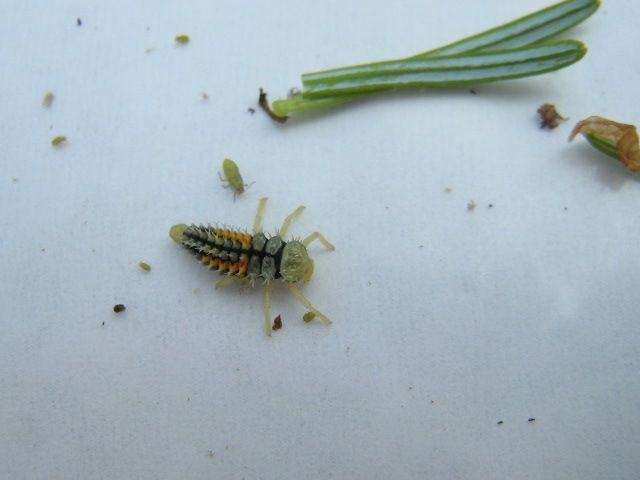
- Scouting after treatment: Assess insecticide control the week after treating but before trees break bud by beating foliage as previously described.
How weather affects: Wet, cold weather causes aphids to move deeper into the tree canopy for protection, so it’s best to wait until the next sunny day before scouting.
How to develop treatment threshold: Treatment is not necessary in trees that are two years or more from market. In trees nearing market, even a few aphids can mean damage since the aphids quickly reproduce. A good working threshold is if even a single aphid is found on two different trees in a block before bud break, then that block is at risk of sustaining twig aphid damage that will affect the trees’ marketability if left untreated. After bud break, only treat if predators are not commonly found.
What can be confused with pest/damage:- Twig aphid eggs are the same size as balsam woolly adelgid nymphs. However, adelgid nymphs have orderly rows of white waxy rods whereas with twig aphid eggs, they are randomly scattered at different angles across the entire surface of the egg.
- No other pest of Fraser fir looks like twig aphids but there are many green aphids that feed on groundcovers around trees. Sometimes these aphids also get knocked into the plate when foliage beats are taken. Typically these aphids have longer legs and antennae and are a brighter green, and therefore easily distinguishable from twig aphids. Cinara aphids can also fall out onto beat plates. These are larger than twig aphids and are brown or black.
- Wind and hail damage can twist Fraser fir shoots but the needles are typically still straight. Herbicide damage can also twist shoots as well as needles.
Important natural enemies:
- Look for predators when taking foliage beats. Leave flowering groundcovers around your trees to attract predators as all of the twig aphid predators require pollen and nectar to thrive.
- Hover fly larvae – may also find hover fly eggs on shoots.
- Lady beetles and their larvae – may also find lady beetle egg clusters and pupae on shoots.
- Lacewing larvae – may also find lacewing eggs on shoots.
For more information on twig aphids including photographs, seeBalsam Twig Aphid.
For the complete Fraser fir scouting manual for western North Carolina, see Scouting Manual.